Shaping a campaign · Financial services · Enterprise workflows

Shaping a campaign

Designed for the team that sends a financial services firm's advice to thousands of clients.

Campaign workflow platform
Team
3 designers
Timeline
6 months
Worked with
Engineering, analysts
Status
In build

The short version

  1. The brief

    Redesign how the firm builds campaigns, from hundreds of pages of signed-off requirements. I had a few days.

  2. The catch

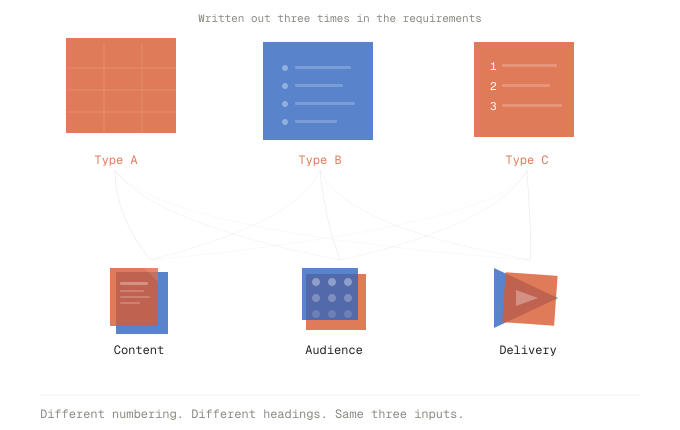
    An AI summary of the spec found three campaign types. Laying their inputs side by side, I found they were one.

  3. The call

    One flow that branches only where the types really differ.

  4. The pushback

    Stakeholders saw fewer steps and assumed requirements had been dropped.

  5. How I won them over

    I mapped every old requirement onto the new flow. Nothing was missing.

  6. The trade-off

    Rarely used fields stay hidden until a campaign needs them. Simpler by default, still complete.

  7. Where it landed

    Reviewed with the client throughout. Now in build.

My role & impact

Senior Product Designer. Three designers, including the design lead. On-site with the team in stretches.

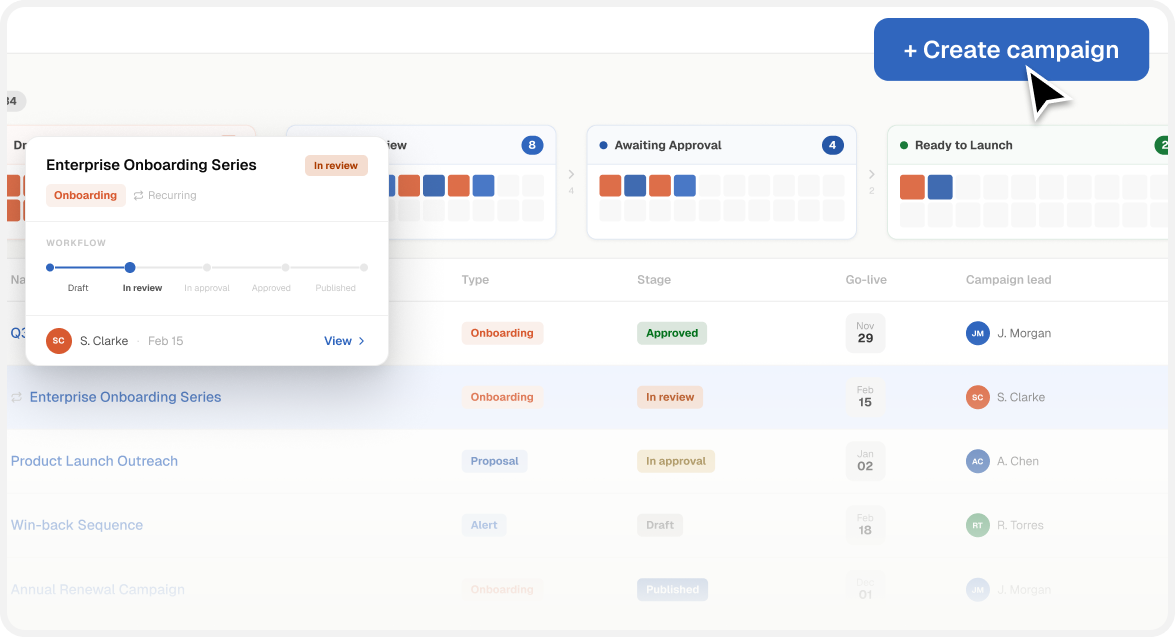
  • Owned campaign creation end to end: the campaign list, the creation flow, audience targeting, and the states that stop a campaign
  • Designed the replacement for a process assembled by hand across four separate tools
  • Restructured a flow that an agreed spec had already locked in, working from an AI-assisted analysis of hundreds of pages
  • Defined the audience targeting model, including how compliance exclusions surface

My responsibilities

  • AI-assisted requirements analysis
  • Workflow design
  • Targeting and audience flows
  • Compliance and blocked states
  • Stakeholder alignment
Table of Contents
  1. PROBLEM: What was broken?
  2. DISCOVERY: How did I find the real problem?
  3. SOLUTION: What did I change?
  4. STAKEHOLDER ALIGNMENT: Who pushed back?
  5. REFLECTION: What did I learn?

PROBLEM: What was broken?

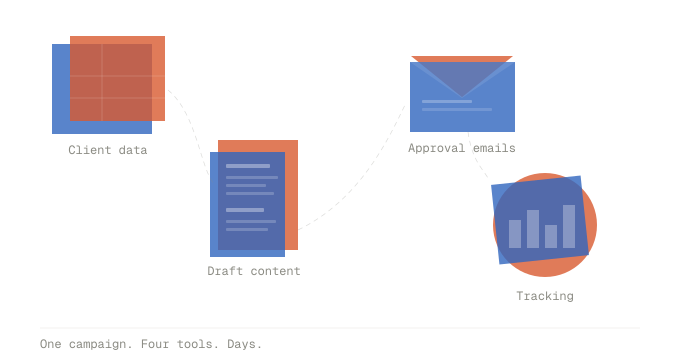
Every campaign assembled by hand across four tools. The weekly one took days.

The team that reaches the firm's clients assembled every campaign by hand: client data pulled from one place, filtered in another, drafted somewhere else, approved over email. Nothing recorded who signed off, nobody flagged when new content arrived, and one weekly campaign took days.

DISCOVERY: How did I find the real problem?

The requirements were long. Three campaign types shared most of one flow.

The requirements were long. I used an approved AI tool to condense them and lay them against the UI fields. Three campaign types looked like three different things. When I listed what each step needed instead of reading steps, the same inputs appeared under all three. The requirements wrote them out once per type, so I could count the repetition.

SOLUTION: What did I change?

The repeated steps collapsed into one flow that shows only what each campaign needs.

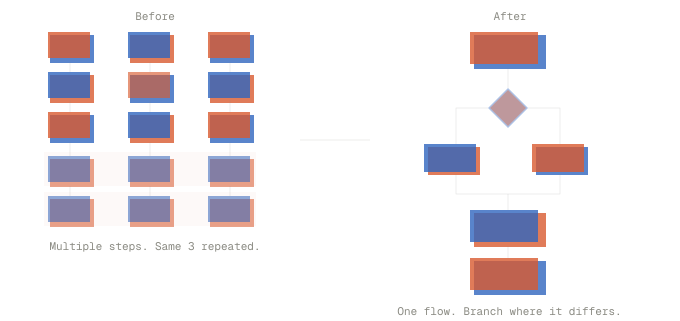
The three types shared most of one flow. I redrew it as one flow with a branch: you choose how the campaign starts, and only the few things that differ change. Everything else is the same for every type.

STAKEHOLDER ALIGNMENT: Who pushed back?

A simpler flow no longer matched the requirements that had already been signed off.

That meant fewer steps than the agreed spec described. Stakeholders pushed to keep the original flow. From where they stood, the simpler version looked like something was missing.

The screens couldn't show the difference, so I drew the old flow and the new flow side by side. Every requirement was still there, and it showed up when a campaign needed it. That convinced them.

REFLECTION: What did I learn?

Listing inputs found the repetition. The before-and-after map moved it into the build.

The client reviewed the designs throughout, and the platform is now in build. At launch I would watch two things: whether a simple campaign gets built faster than a complex one, and how often a campaign comes back for rework.

Listing inputs found what the summary hid.

I had a couple of days to get through the requirements. The AI summary was fast. The repetition surfaced when I stopped reading steps and wrote down what each step needed.

The map convinced them.

I drew the before-and-after to think with. It became the only thing that showed my design lead and project leadership that a shorter flow still did everything the signed spec asked for.

Being on-site changed what I could do.

For stretches of the project I sat in the same room as engineering and the analysts. When something in the requirements didn't add up, I could ask the analysts who worked on the spec instead of waiting on a reply.
Detailed case study available on request.